
Items
-
 Woman assaulted during wellness check **The account below is a community submission to the Archive. It has been anonymized to protect the identity of the person(s) and agency involved. This account is a personal reflection based on lived experience and opinions. All incidents are allegations not proven in a court of law, and the Archive does not investigate the veracity of reported incidents.** On May 23 around 1:30 pm, I had walked from my home to a park bench while experiencing an autistic meltdown. My partner was worried about me and called the police, with the understanding that they would send a crisis intervention team paired with an AHS mental health specialist to assess the situation and ensure my safety. A screenshot of the PACT (Police and Crisis Response Team) policy from their website is attached. I texted [my partner] with my exact GPS coordinates. There were other witnesses there that can attest to me sitting/lying peacefully (though crying) on the park bench. [My partner] came and found me. We embraced. She consoled me. And she told me I’d have to talk to the police before we went home. I said “I don’t want to talk to the police” (bad experiences, go figure). When the male officer who had just came into my field of vision said my “boyfriend” was pretty worried about me, I responded “not my boyfriend” (as she is trans). IMMEDIATELY both officers had their hands on me (the female officer from behind on my left (I hadn’t even seen her), and the male officer right in my face. I didn’t recall until later that in this moment I screamed. The same blood curdling scream I’ve let out when assaulted previously. I left my body. I wasn’t there. I was again a powerless child in the vice grip of my abusive father. The male officer then slapped me in the face. From there they were dragging me, tackling me, trying to restrain me, threatening to taze me, and never telling me why. [My partner], who had made the call in the first place, was BEGGING them to stop, asking them why they were escalating, pleaded with them to stop. The male officer then threatened to taze her and put her in a choke hold and dragged her away from me. We tried telling them I’m autistic (I am). They laughed and called me a “fucking retard”. I submitted and let them tackle me to the ground and cuff me. 4 officers had me pinned and I couldn’t breathe. I am a 5’5” average frame woman. They dragged me across the grass to the cop car. One of my shoes fell off and they slammed me against the side of the car and kicked my legs open to pat me down for weapons before tossing me in the back of the car where I could see my partner lying on the ground having a panic attack. The officers then proceeded to tell me repeatedly that I didn’t know how lucky I was that they didn’t “punch me out” in the face. And they mocked [my partner] for calling the police for “help” and then refusing said “help”. They kept me in cuffs for 4 hours. I spent 2.5 in the waiting room at the hospital. I was not permitted any water until [my partner] happened to find me there and asked the staff and police attending to me if she could get me some. I had asked for water repeatedly and the cops refused. I had literally had a psychiatrist appointment earlier that day and she swapped my meds for the following day because my Vyvanse was preventing me from eating and drinking. I was on the tail end of an autistic meltdown after regulating myself with a walk when the police tackled me, beat me, berated me, and then denied me basic human rights like water and even a phone call. (Since I wasn’t under arrest, they didn’t need to give me a call). They told [my partner] once she got to the hospital that the reason I was in cuffs is because under the Mental Health Act, they “can”. Again… forgetting that the EPS has the PACT policy in place. How could the cops justify holding me under the Mental Health Act when they didn’t follow the procedure to ensure they weren’t violating that very act? The cops were not wearing body cams in spite of there province mandating their use in 2023: I was told this was a “pilot”—in other words, they’ve had a mandate for 2 years to get body cams on cops and still haven’t. Why is there no publicly register for police officers? I cannot look up these MFers last names nor badge numbers to confirm their status. As far as I know there’s zero transparency for cops with black marks on their records. Who watches the watchman. Pictures enclosed of my bruising."
 -
 Harm Reduction Organizer Testimonial Recorded Summer 2025 Transcript/recording of an interview with a community organizer in harm reduction on their experience of policing in Edmonton and its impact on unhoused and other populations. *Transcript has been lightly edited for anonymization - the opinions in the interview are those of the organizer and allegations of violence have not been independently verified.*
 -
 Suspect tasered by Edmonton Police officer experienced collapsed lung Edmonton Police officers were dispatched on October 22, 2016 at approximately 8:33 p.m. to the area of Fox Drive and Fort Edmonton Park Road in response to a 911 call. A shirtless man attempted to flee from multiple officers and a helicopter, falling down an embankment before being captured with the use of a taser and police dog. One deceased individual was found in the area during the search, with the fleeing man being designated as suspect. Emergency medical services on the scene determined the man had a collapsed lung, for which he was taken to hospital. The victim in the incident, Connor James Miller, was later charged and convicted with manslaughter for the murder of his friend Christopher Fawcett in the river valley that evening. On a toxicology screen, he was found positive for LSD.
 -
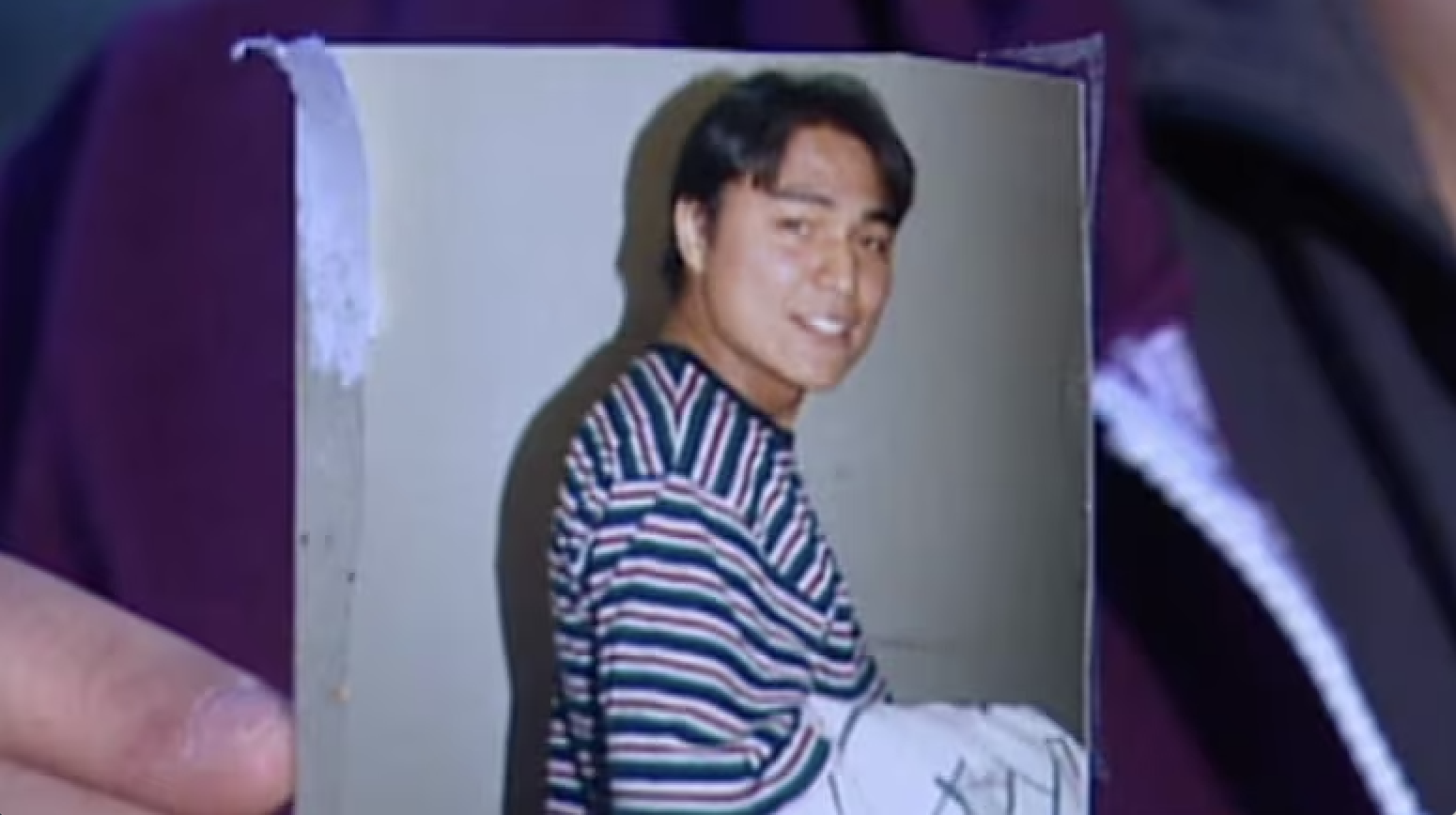 Indigenous man fatally shot by officer in Glenwood Kinling Robin Fire, 39, was fatally wounded by EPS officers on March 30, 2011. The events took place in the Edmonton neighbourhood of Glenwood, shortly before midnight. EPS officers Const. Brent Fox and Const. Brendan Power were dispatched to locate a Fire, who was believed to be suicidal. The officers also received a report of suspected impaired driver, who turned out to be Fire. Relatives of Fire reported that he was distraught after an argument with his ex-girlfriend and that he had consumed a bottle of prescription sleeping medication. Fire was found by the officers driving his car near a west-end apartment building at 155th Street and 100th Avenue. When Fire did not exit the vehicle or respond to Power, Power broke the driver’s side window with his baton and unlocked, then opened the driver’s side door. Fire exited the car, angry, and began moving toward Power while holding a metal bar. Fire continued to approach Power and Power fired two shots, hitting Fire in the chest. After handcuffing Fire, EPS administered medical services on the scene and Fire was transported to the University of Alberta Hospital in Edmonton, where he was pronounced dead around 4:00 am on Thursday, March 31, 2011. The results of an ASIRT investigation were released on July 24, 2012, stating that the actions of the officer were justified, and no charges would be filed. A report into the fatality inquiry by was released in 2015, coming to the same conclusion as ASIRT. In 2017, the family of Fire applied a judicial review, calling for a new inquiry into the events of March 30, 2011. Fire’s sister, Wanda Bearboy, reports that despite numerous calls to Alberta Justice requesting information about the inquiry, Bearboy was not included in the process or informed of her rights, like the ability to call witnesses or ask for an adjournment.
 -
 Woman sexually assaulted by constable while he was on duty A 24-year-old woman was sexually assaulted by EPS officer Hunter Robinz while in uniform and on duty. He was charged for breach of trust in allegedly attempting to communicate with women crime victims and seeking sexual relationships with them. There was a second breach of trust related to his using Canadian Police Information Centre (CPIC) and Edmonton Police Reporting and Occurrence System (EPROS) databases between 2018 and 2019 for reasons unrelated to police investigations. ASIRT charged Const. Robinz with sexual assault, unauthorized use of computer database and two separate counts of breach of trust.
 -
 Victim accuses officer of negligent operation of motor vehicle that caused loss of child and left disabled another child On June 2, 2001 Constable Brander crashed broadside into the victim’s car as it turned left across police car’s path. As a result of the crash, Carlos Ramirez’s grandson Giovanni was killed, his grandson Jonathon was seriously injured, and his daughter Gloria were injured. Constable Brander and his partner Jean Guy were assigned general police duties including enforcement of traffic laws. They were on the way to confirm a service address for arrest warrant on an individual section of Edmonton. At 127th street they have decided to try and catch and stop two racing vehicles. Brander was driving. Officer accelerated as he wanted to catch up to speeding vehicles to get into a position to get their license numbers and stop them. He estimated his speed at 110 km/hr and no more that 120 km/hr. constable Brander was found not guilty on all accounts.
 -
 Victim files complaint that police assaulted and removed him from home The victim, 50-years old man born with cerebral palsy has been tasered and incarcerated for not complying with terms of lease agreement and outstanding warrants (confirmed my Canadian Police Information Center (CPIC)). Based on authority of “Order of Possession” nine officers entered residence of the victim. While in search area victim was not co-operative and physically resisted officers who wanted to conduct a strip search. One of officers held victim while another officer tasered (at least three times) him. Then victim was detained. The victim appeals written decision of A/Chief of Police EPS dated September 20, 2005. This decision dismissed all allegations made by the victim in his written complaint of August 19, 2003, where he alleges misconduct by nine EPS officers: unlawfully evicting victim from his residence and string searching; tasering visitor at the residence of victim; unlawfully assaulting victim including assault with a weapon and not providing access to medical services when requested and required. Decision: Board affirmed decision of the Chief of Police to dismiss the allegations against nine officers.
 -
 Person in custody experiences physical violence from police. On December 28, 2013 victim attended Edmonton Oilers hockey game at Recall Place and later was arrested and detained by the Edmonton Police Service (EPS). The victim submitted Statement of claim that he was not informed of reasons for his arrest and detention at Rexall Place by any of respondents along with unlawful and unnecessary exercise of authority, force, insubordination, and neglect of duty. Further, it is alleged that victim was not immediately advised of his Charter rights upon arrival at Downtown Division, and that he wasn’t provided opportunity to speak to counsel until approximately three hours after his arrest. The timing of completion of the investigation was such that it was completed and forwarded to counsel for review before the letter from the appellant’s counsel dated August 6, 2015 was received by PSB. The suggested importance of the transcript was not flagged by appellant’s counsel and a copy was not provided to PSB or the Chief. There is no evidence on the record of lack of transparency or that the or the Chief deliberately ignored information in the trial transcript that was decisive of an important issue. The Board concluded that the investigation conducted by the Chief was reasonable and not tainted or compromised.
 -
 Victim suffers injuries during police arrest. The victim alleges that on June 29, 2011, Constable Bradley Pearce and Constable Derek McIntyre caused bodily harm while arresting him for violating his parole. Tam Nguyen, a case worker at Independence Apartments halfway house testified he saw officers dragging victim up the stairs and Const. Pearce strike the parolee in the head with an open hand. The victim received three stitches to his head and suffered two black eyes and a swollen cheek. Because initial prosecutor proceeded summarily rather than by indictment in provincial docket court, the judge declared a mistrial.
 -
 Woman receives inappropriate, sexually explicit text messages from an officer who had previously arrested her In 2011, Officer Butchike arrested a woman in relation to a fraud investigation. Between late July and September 18th of that year, he was accused of sending sexually explicit and inappropriate text messages to the woman that were unrelated to his investigation. A complaint was launched by the woman in late 2011, and Butchike was charged with insubordination as well as discreditable conduct, with a deceit charge later added for his handling of the resulting EPS Professional Standards Investigation. Butchike quit his job with EPS in May 2014 just minutes before his disciplinary hearing was due to begin.
 -
 Victim who was cooperating suffers serious injuries when officer releases police dog to attack The victim alleges that in 2009, Constable Dzioba pulled him over for a missing licence plate. The Statement of Claim states that the victim cooperated by getting out of the car, placing his keys on the ground, putting his hands behind his head and approaching the officer to surrender. Despite this, the victim claims that Dzioba deployed his police dog without any warning or prior instruction to the victim. The victim suffered extensive injuries as the dog bit him for several minutes, resulting in permanent injuries and muscle damage. In 2012, Dzioba was due to attend a disciplinary hearing for unlawful or unnecessary exercise of authority and deceit with relation to this event. He turned in his badge and resigned the day before the hearing was meant to occur.
 -
 Indigenous youth shot and killed by officer On February 5th, 2011, Constable Redlick and several other officers were dispatched to a robbery call. At the scene, there was a confrontation between officers and a 17 year old Indigenous boy. Officers claim that the teen carried a knife and a baseball bat, and charged toward Redlick, yelling "you're going to have to shoot me". No physical contact or altercation had yet been made with the victim when Redlick shot him three times from what he judged to be around three meters away. He died soon after on the operating table. Family and friends on the Cold Lake First Nation say that he was a troubled boy and struggled with alcohol addiction but didn't deserve to die. A fatality inquiry report released in August 2014 ruled that Redlick's actions were justified because the officers at the scene were faced with lethal force. An investigation by the Alberta Serious Incident Response Team also found Redlick's actions justified in December of 2011. The teen's family sued police, alleging that Redlick's testimony contained contradictions and fabrications. The teen's father hired a lawyer that asserted an Indigenous investigator should have been hired to look into the case.
 -
 Youth victim cooperates with arrest, officer tases him despite cooperation On April 3, 2004, a 21 year old man was followed by police in a car chase through North Edmonton. He was stopped with spike belts and got out of the car at a run. Soon he surrendered and dropped on his stomach to the ground. He was approached by six officers, including Constable Wasylyshen, who kicked him in the head. A knee was placed on his back holding him down, bloodying his face. He was then tasered multiple times by several officers.While attempting to handcuff him, Wasylyshen broke and injured fingers on the victim's hand. At a cross-examination after the event, the court found Wasylyshen to have displayed a disturbing arrogance and an unwillingness to confront his mistakes. In a 2012 disciplinary hearing, Wasylyshen was found guilty of two counts of unlawful or unnecessary exercise of authority and insubordination.
 -
 Victim endures extensive delay of justice and lingering mental anguish when officer fails to lay charges against sexual violence perpetrator as directed A series of delays and poor communication with regards to handling sexual assault charges caused considerable distress to a victim who had been sexually abused by both her father and brother. On December 30, 2009, Officer Dahl completed an arrest report detailing the arrest of a man for multiple crimes against his sister, including sexual assault. He also forwarded information to the Delta Police Department regarding laying charges against the victim's father for historic sexual assaults that had previously been dismissed with no charges. In early 2010, the Delta Police Department returned the file to Dahl, stating that Crown approval was needed before they could proceed. The documents were forwarded to the Edmonton Crown Prosecutor's office in May of 2010. On November 2, 2011, Officer Dahl was forwarded a letter from the Crown recommending charges of sexual interference and sexual assault against the victim's father. The letter included instructions for Dahl to notify the Crown when the charges were laid and initial court date. In 2013 Dahl appeared at the Assistant Chief Crown Prosecutor's office without appointment, announcing that he had never laid the charges as instructed. The victim had phoned him to inquire and he realized his mistake. Dahl was then subject to an EPS investigation on allegations of Neglect of Duty. Investigators contacted the victim who expressed frustration with the process for taking so long and preventing her from moving on with her life due to the trial hanging over her. She was also angered by the fact that her father had developed severe dementia and would be unlikely to be held accountable for his actions due to the delays. During a disciplinary hearing in 2015, the allegations were proven to be true. He was given an 80 hour suspension without pay.
1–25 of 252